You might hold the secret to data security in your finger • Blisstech Solutions

You might hold the secret to data security in your finger

We all know how important it is to keep our data safe, whether it’s our business secrets or just personal info. Passwords used to be the number one way to keep things under wraps.

But are they still cutting it today?

According to a recent report, it seems many people are sticking to their guns when it comes to passwords, with only a small fraction opting for biometrics like fingerprints. But why the hesitation? It seems like everyone’s got data privacy and security on their minds, and that’s totally fair.

So, what exactly are biometrics, and why should we consider them as a more secure alternative to passwords?

Biometrics are all about using your unique physical or behavioural traits – like your fingerprints, face, or even your eye scan – to prove it’s really you. Unlike passwords, which can be forgotten, stolen, or cracked, biometrics bring a whole new level of security to the table.

Sure, there’s still some worry about biometric data getting into the wrong hands. But don’t worry too much. When you use biometrics, you are not actually storing an image of your face or fingerprint to compare later; you are using cryptographically derived data from your biometric, which, when stored in protected hardware, as it usually is, makes it insanely hard to hack.

Biometrics are still a solid weapon in the fight against cyber threats. They’re harder to copy than passwords and offer unparalleled convenience. No more struggling to remember a jumbled mess of letters and numbers… just a quick scan of your fingerprint or face, and you’re good to go.

But what if you’re not sold on biometrics just yet?

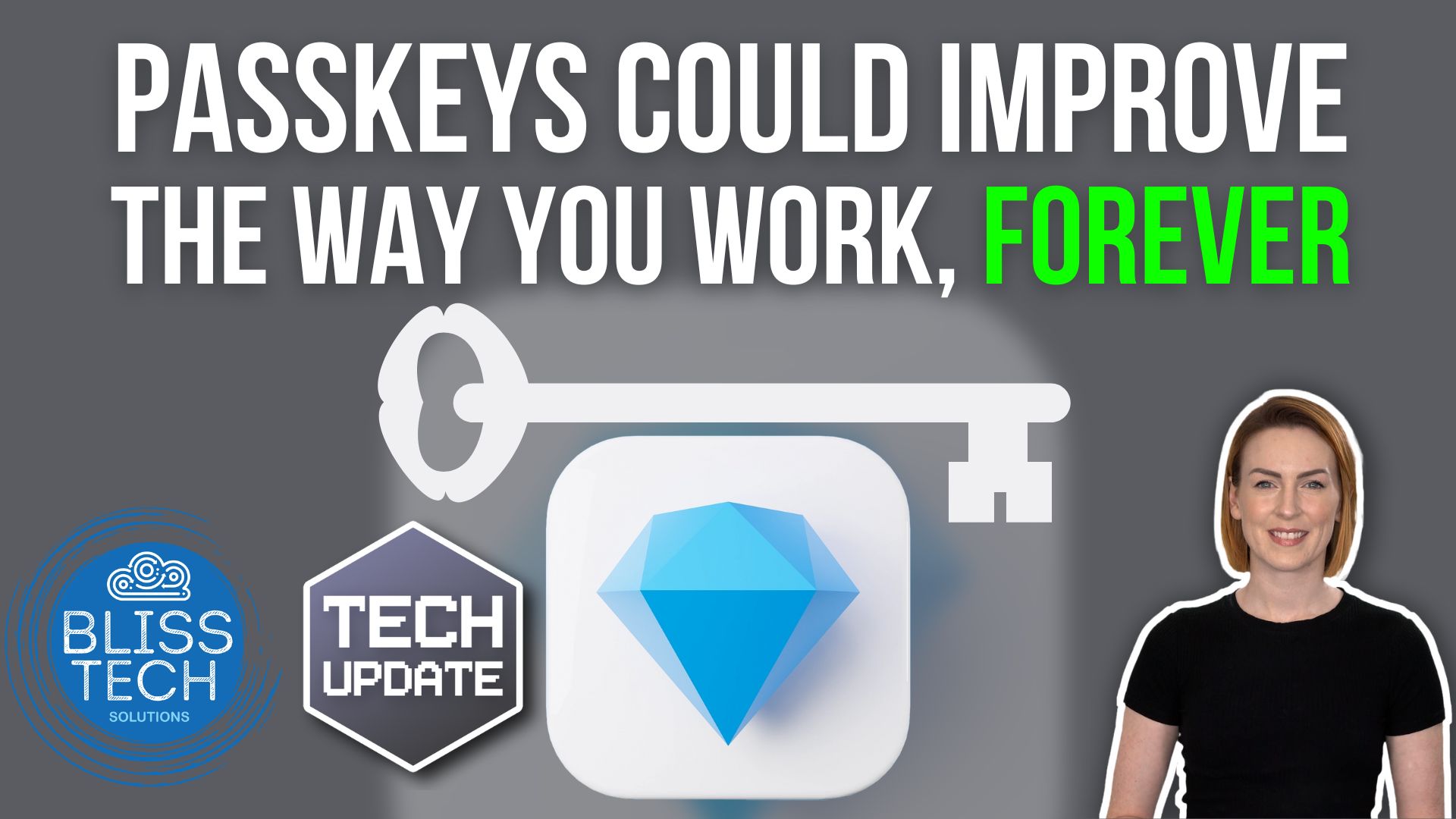
There’s an alternative: Passkeys.

These clever authentication methods offer another option to the old-school password. Passkeys use special codes unique to each person and are tough to phish (that’s when someone tries to trick you into giving away your login credentials).

By mixing biometrics with passkeys, you can make a big enhancement to your business’s security without making your staff’s lives harder (in fact most people find biometrics and passkeys easier).

Passwords may have served us well in the past, but it’s time to embrace new, safer methods of authentication. Need a hand implementing biometrics or passkeys? We can help – get in touch.
More Content

How to create secure passwords

How to create secure passwords

Weak passwords are one of the biggest security risks to your business.
Why?
Because cyber criminals are getting smarter than ever before. If they manage to crack just one password, they could gain access to your sensitive business data, financial information, or even gain control of your entire system.
Cyber criminals use automated tools to guess passwords, allowing them to try out millions of combinations in seconds. So, if you’re using something like “Password123” or “CompanyName2025”, you’re practically handing them the keys to your business.
A compromised password can lead to big issues, such as:
• Data breaches
• Financial losses
• Identity theft
• Reputation damage
But how do you create strong passwords without driving yourself (and your team) mad?
Think of your password like a secret recipe, where only you should know the ingredients. It should:
• Be at least 14 characters long (the longer, the better)
• Include a mix of uppercase and lowercase letters
• Contain a few numbers and symbols (like @, $, %, or &)
• Not contain any common words or easily guessable information (like birthdays, names, or the word “password”)
Instead of using a single word, you could try a passphrase – a short, random sentence that only you would understand. For example, instead of “Sailing2025”, try something like “Coffee&CloudsAreGreat9!”. This is much harder to crack, yet still easy to remember.
You should also steer clear of these common mistakes:
• Using personal info (your name, birthday, business name, etc.)
• Reusing the same passwords across multiple accounts
• Using simple sequences (“123456” or “abcdef”)
• Storing passwords in an easily accessible place (like a sticky note on your desk)
If remembering unique passwords for every account sounds impossible, there is another option: Password managers. These generate strong passwords, store them securely and autofill them for you.
With a password manager, you only need to remember one strong master password for the manager app itself. The rest are encrypted and stored safely, reducing the risk of data breaches.
Even the strongest password isn’t foolproof, which is why multi-factor authentication (MFA) is also important. MFA requires a second form of verification, like a one-time code sent to your phone or generated from an authentication app.
If you have employees accessing your business systems, it’s a good idea to have a password policy in place to explain your rules and why they’re important. This should include:
• Unique passwords for each system and account
• Regular security training on password best practices
• Business-wide use of MFA for critical systems
• Scanning for compromised passwords regularly
By making password security a priority, you can reduce the chances of a cyber attack creating a nightmare for your business.
And if you need help making your business more secure, get in touch.

Your business’s passwords are still too weak

Your business’s passwords are still too weak

“iloveyou”, “12345”, “qwerty1”. If I’ve just guessed all your passwords, you need to change them, immediately. Why? Because your passwords are STILL too weak. It’s a big problem…

Tech Tip: How to add a mailbox to Outlook

Welcome to our latest tech tip blog post! In this article, we will be discussing how to add a mailbox to Outlook, a widely used email client that allows users to manage multiple email accounts in one place. Whether you're new to Outlook or just need a refresher, this...
Windows 11 will warn you if someone’s snooping

Windows 11 Onlooker Detection will warn you if someone’s snooping

You know that feeling that someone’s looking over your shoulder?
When you’re working, it’s not just creepy, it’s a security issue. But Microsoft’s working on a very cool feature in Windows 11 that will stop people snooping at your work. Here’s what we know so far…

The Microsoft sign on a building

Microsoft urge users to patch against critical vulnerability

Microsoft is warning of a recently discovered critical Windows DNS Server vulnerability that is described as “wormable”. DNS (Domain Name Services) is used by computers all over the world to find each other. The Internet could not work without it. Microsoft DNS is...
A handshake reaching out of a laptop screen

What is a managed service?

If computers are an essential part of your business you will probably have someone looking after them for you, but what type of service are you getting from them?  Have you heard the expression "Managed Service" or "Break/Fix"? You may have heard these expressions and...

Tech Tip: How to Follow Sites in SharePoint

Hello, Happy New Year and welcome to today's Tuesday Two Minute Tech Tip which is about how to find the data you want to access in SharePoint and OneDrive. If you are working with files in Teams and on SharePoint sites, you might wonder why you do not see the sites...

Tech Tip: Master Your Multitasking – Switching Apps and Desktops Like a Pro

Welcome to a new Tuesday tech tip video where I will show you how to switch between applications and desktops in Windows quickly. Sick of losing track of what you're doing because you have too many windows open? Let's face it: we've all been there. Well, this video is...

How to Plan for Upgrading to Windows 11: A Guide

The Clock’s Ticking for Windows 10: Are You Ready? 14th October 2025 is the day Microsoft ends free support for Windows 10. This means no new features, no bug fixes, and no more security updates. You can't risk that. Why Upgrade to Windows 11? Windows 11 offers a...

How to scan a QR code with your phone

As more venues open up for face to face meetings, some are introducing their own track and trace systems using a QR code that you need to scan with your mobile phone. But how? This video explains how to scan a QR code with your phone so you are not trying to figure it...
Share This
Contact
Love Lane
Cleobury Mortimer
Shropshire DY14 8PE

01299 382 321
[email protected]
Copyright © Blisstech Solution Ltd
Registered No: 08125391 VAT No : 307 5490 05