Which ransomware payment option is best? (Hint: none) • Blisstech Solutions

Picture this: Your business gets hit by a ransomware attack, and your valuable data is locked away by cyber criminals demanding a huge ransom fee.

You can’t afford to pay it. But there’s a twist – just like those “buy now, pay later” schemes, some ransomware gangs are offering victims payment extension options.

Recent research reveals that ransomware groups are getting creative with their extortion strategies. One group is even offering victims various choices when it comes to their ransom demands. These “choices” include:

Paying to delay the publication of their stolen data, with a standard fee of $10,000… or paying to have their stolen data deleted before it’s made public.

The exact amounts charged are often negotiated with victims, adding a chilling dimension to the whole ordeal.

These ransomware groups have added some terrifying features to their websites to increase the pressure on victims. These include countdown timers displaying how long businesses have before their data is released, view counters, and even tags revealing the victim’s identity and description.

It’s all designed to make victims feel cornered and more likely to give in to the demands.

You might be tempted to pay that ransom to protect your business data. Not so fast. Paying is always a bad idea, and here’s why…

Paying doesn’t guarantee that you’ll get your data back or that the cyber criminals won’t demand more money later.

By paying, you’re essentially funding criminal activities, encouraging them to continue their attacks on others.

Paying a ransom might even get you into legal trouble, as some governments have made it illegal to pay cybercriminals.

So, how can you safeguard your business from falling victim to ransomware?

Paying cyber criminals rarely makes things better, and businesses that do pay repeatedly become targets.

Instead, invest in the proactive measures above to help you stay secure. And if we can help you with that, get in touch.
More Content

Secure your data under lock and key

Your business's data is invaluable. Without it, you wouldn’t have much of a business, would you? So that data must be kept safe… and one of the best ways to do that is to encrypt it. That way, even if a cybercriminal gets their hands on it, your data is worthless to...

5 Reasons why cybersecurity awareness training is a good investment

Cyber attacks are on the rise. Any business that has experienced any form of internet security breach knows that it can be costly in terms of time and money. The reputation of a business is also at stake if client data is compromised. Cybersecurity is an issue that...
You’re ready for the upgrade… what’s holding you back?

You’re ready for the upgrade… what’s holding you back?

Still not upgraded your business to Windows 11? You’re missing out, and what for? It’s free to upgrade and easy. Find out more here.

Laptop and stethoscope

How Much Should You Pay for IT Managed Service Costs in the UK?

If you are looking for managed IT services in the UK, you should understand there is no "one-size-fits-all" solution. There are many managed service providers out there and they offer a huge range of prices. This can be overwhelming when trying to choose between them!...
Microsoft plans a naming system for hackers

Microsoft plans a naming system for hackers

Hacking groups are given different names by different security companies. And that means you don’t know who’s really behind an attack so can’t react as quickly as you’d like. That’s about to change, thanks to Microsoft…

How Copilot Wave 2 can boost your business

Imagine how different your business would be without Microsoft 365’s suite of apps and tools. It’s a business essential that makes everything easier. Now imagine these apps and tools could do more. Imagine they could summarise reports, documents, and meetings. Or...
How to create secure passwords

How to create secure passwords

Weak passwords are one of the biggest security risks to your business.
Why?
Because cyber criminals are getting smarter than ever before. If they manage to crack just one password, they could gain access to your sensitive business data, financial information, or even gain control of your entire system.
Cyber criminals use automated tools to guess passwords, allowing them to try out millions of combinations in seconds. So, if you’re using something like “Password123” or “CompanyName2025”, you’re practically handing them the keys to your business.
A compromised password can lead to big issues, such as:
• Data breaches
• Financial losses
• Identity theft
• Reputation damage
But how do you create strong passwords without driving yourself (and your team) mad?
Think of your password like a secret recipe, where only you should know the ingredients. It should:
• Be at least 14 characters long (the longer, the better)
• Include a mix of uppercase and lowercase letters
• Contain a few numbers and symbols (like @, $, %, or &)
• Not contain any common words or easily guessable information (like birthdays, names, or the word “password”)
Instead of using a single word, you could try a passphrase – a short, random sentence that only you would understand. For example, instead of “Sailing2025”, try something like “Coffee&CloudsAreGreat9!”. This is much harder to crack, yet still easy to remember.
You should also steer clear of these common mistakes:
• Using personal info (your name, birthday, business name, etc.)
• Reusing the same passwords across multiple accounts
• Using simple sequences (“123456” or “abcdef”)
• Storing passwords in an easily accessible place (like a sticky note on your desk)
If remembering unique passwords for every account sounds impossible, there is another option: Password managers. These generate strong passwords, store them securely and autofill them for you.
With a password manager, you only need to remember one strong master password for the manager app itself. The rest are encrypted and stored safely, reducing the risk of data breaches.
Even the strongest password isn’t foolproof, which is why multi-factor authentication (MFA) is also important. MFA requires a second form of verification, like a one-time code sent to your phone or generated from an authentication app.
If you have employees accessing your business systems, it’s a good idea to have a password policy in place to explain your rules and why they’re important. This should include:
• Unique passwords for each system and account
• Regular security training on password best practices
• Business-wide use of MFA for critical systems
• Scanning for compromised passwords regularly
By making password security a priority, you can reduce the chances of a cyber attack creating a nightmare for your business.
And if you need help making your business more secure, get in touch.

Tech Tip: How to get the most out of Google searches

Hello everyone! Today's Tuesday Two Minute Tech-tip shows you how to get the best out of your Google searches. Google search is arguably the best in the world and gives us the internet at our fingertips, but it can be hard to find what you are looking for. This tip...

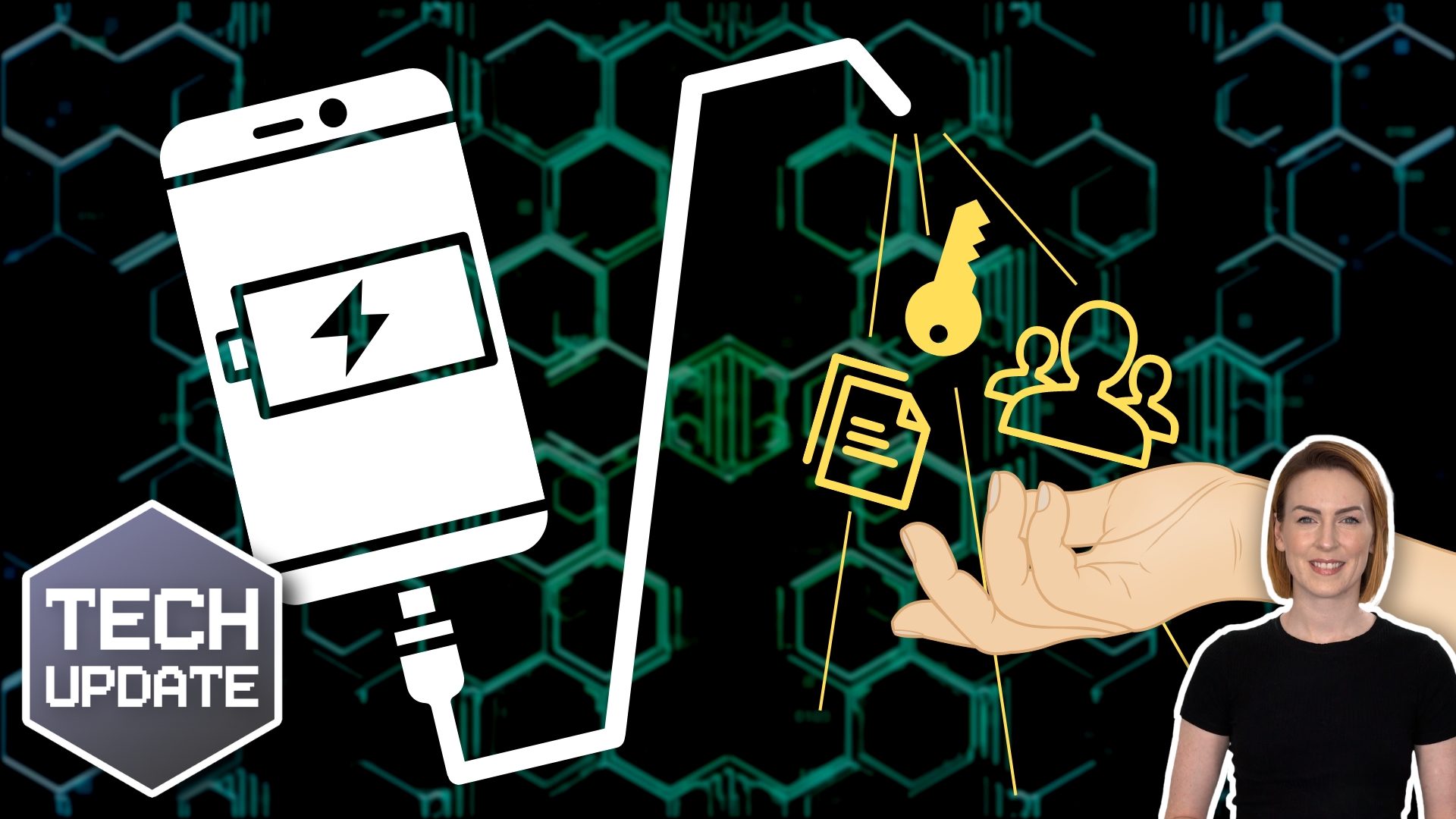
Don’t forget your phone when you think about cyber security

Our phones are a goldmine of private information. If they’re not as secure your other devices, they can become a gaping hole in your cyber security

Ransomware Attacks Grow for Small Businesses

Two organisations have recently released reports on the state of ransomware and cybersecurity incidents affecting small businesses. Datto's State of the Channel Ransomware Report Datto has recently released their "State of the Channel Ransomware Report"  for 2019...
Share This
Contact
Love Lane
Cleobury Mortimer
Shropshire DY14 8PE

01299 382 321
[email protected]
Copyright © Blisstech Solution Ltd
Registered No: 08125391 VAT No : 307 5490 05