Spam emails are losing your business hundreds of hours every year • Blisstech Solutions

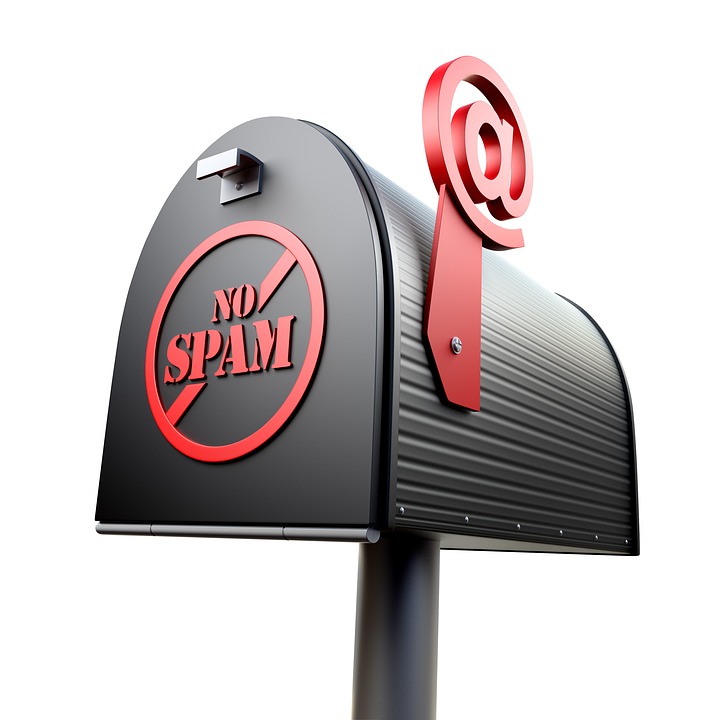
A mailbox with NO SPAM written on it

Spam emails: Very annoying and everyone hates them!

They take up your time and make it hard for you to get other work done!

A recent study found that each one of our employees could be losing 80 hours per year due the hassle associated with managing spam.

That’s a LOT of lost productivity.

Anywhere between 45% and 85% of emails generated each day are spam emails. And worryingly, that also includes malicious emails and those hoping to infect you with malware.

Although we don’t all receive the same number of emails every day, the hours lost to filtering them out adds up. This is especially true when you consider that the average person spends 2.5 hours per day checking email.

If an employee gets 30 external emails a day, they’d get around 30 spam emails each week. That would work out to around 5 hours each year wasted on sorting through and deleting them.

For an employee who gets up to 60 emails a day, it would be an average of 11 hours a year wasted.

And for someone who gets more than 100 emails each day, you’re looking at around 80 hours of productivity lost to filtering emails each year.

Now add that up across your business and you could be looking at a big number.

Not only that, but since a percentage of these emails will be phishing attempts (where the sender tries to trick you into performing an action that would secretly give them access to sensitive data), it’s also a big risk to your data security too.

Of course, there are a few measures you may take to reduce the amount of time spent dealing with spam emails. The first is to utilize your email service’s spam and junk email filters.

You might also consider bringing in specialised anti-spam and anti-phishing technology.

Finally, you may train your staff on the dangers of spam, how to identify bogus emails, and how to deal with them more easily to save time and avoid malware or a data breach.

If that kind of technology or training is something you’d like some help with, get in touch.
More Content

Learn how to talk tech with our Jargon Buster

Do you find IT terminology difficult to comprehend? To ensure effective communication with our clients, we strive to avoid using technical jargon. However, having a basic understanding of some IT terminologies may prove advantageous in seeking IT assistance in the...
Logos for Microsoft 365

Migrate to Microsoft 365 manually using PST files

When you are migrating to Microsoft 365 from an existing email provider, you'll want to migrate the emails, contacts and calendar from your users existing mailboxes to their shiny new Microsoft 365 mailboxes.  The best-case scenario is your provider will migrate you...
Microsoft plans a naming system for hackers

Microsoft plans a naming system for hackers

Hacking groups are given different names by different security companies. And that means you don’t know who’s really behind an attack so can’t react as quickly as you’d like. That’s about to change, thanks to Microsoft…

Data loss? Save yourself a mighty headache

What would you do if all of your business data were lost? You might panic or stare at the screen in disbelief. However, if you're prepared, you'll have a safety net in place in the form of reliable and tested data backup. This means you can quickly restore your data...

Tech Tip: Master Your Multitasking – Switching Apps and Desktops Like a Pro

Welcome to a new Tuesday tech tip video where I will show you how to switch between applications and desktops in Windows quickly. Sick of losing track of what you're doing because you have too many windows open? Let's face it: we've all been there. Well, this video is...
Power Automate and Flows Thumbnail

Tech Tip: What is Microsoft Power Automate?

Welcome to a new Tuesday tech tip video where I will give you a quick introduction to Microsoft Power Automate. We all want to streamline our work life and make ourselves more productive. Well, if you use Microsoft 365, you can do just that by using Power Automate....
Unwrap the gift of knowledge: 5 free AI courses by Microsoft

Unwrap the gift of knowledge: 5 free AI training courses by Microsoft

Microsoft has a little business-boosting gift that you won’t want to miss out on… five free courses about AI. We have the details, and the links to the courses.

How to stop AI projects stalling

How to stop AI projects stalling

If your business has experimented with AI but hasn’t seen much change, it’s a sign of something missing, not something broken.
The obstacles usually have nothing to do with the technology…

How to create secure passwords

How to create secure passwords

Weak passwords are one of the biggest security risks to your business.
Why?
Because cyber criminals are getting smarter than ever before. If they manage to crack just one password, they could gain access to your sensitive business data, financial information, or even gain control of your entire system.
Cyber criminals use automated tools to guess passwords, allowing them to try out millions of combinations in seconds. So, if you’re using something like “Password123” or “CompanyName2025”, you’re practically handing them the keys to your business.
A compromised password can lead to big issues, such as:
• Data breaches
• Financial losses
• Identity theft
• Reputation damage
But how do you create strong passwords without driving yourself (and your team) mad?
Think of your password like a secret recipe, where only you should know the ingredients. It should:
• Be at least 14 characters long (the longer, the better)
• Include a mix of uppercase and lowercase letters
• Contain a few numbers and symbols (like @, $, %, or &)
• Not contain any common words or easily guessable information (like birthdays, names, or the word “password”)
Instead of using a single word, you could try a passphrase – a short, random sentence that only you would understand. For example, instead of “Sailing2025”, try something like “Coffee&CloudsAreGreat9!”. This is much harder to crack, yet still easy to remember.
You should also steer clear of these common mistakes:
• Using personal info (your name, birthday, business name, etc.)
• Reusing the same passwords across multiple accounts
• Using simple sequences (“123456” or “abcdef”)
• Storing passwords in an easily accessible place (like a sticky note on your desk)
If remembering unique passwords for every account sounds impossible, there is another option: Password managers. These generate strong passwords, store them securely and autofill them for you.
With a password manager, you only need to remember one strong master password for the manager app itself. The rest are encrypted and stored safely, reducing the risk of data breaches.
Even the strongest password isn’t foolproof, which is why multi-factor authentication (MFA) is also important. MFA requires a second form of verification, like a one-time code sent to your phone or generated from an authentication app.
If you have employees accessing your business systems, it’s a good idea to have a password policy in place to explain your rules and why they’re important. This should include:
• Unique passwords for each system and account
• Regular security training on password best practices
• Business-wide use of MFA for critical systems
• Scanning for compromised passwords regularly
By making password security a priority, you can reduce the chances of a cyber attack creating a nightmare for your business.
And if you need help making your business more secure, get in touch.

Serious Flaws Discovered in D-Link Routers

Researchers at Fortinet have uncovered serious flaws in four D-Link routers.  The router vulnerabilities were found to allow for remote code execution which means a remote attacker could gain control of your router, snoop on your traffic and redirect your browser to...
Share This
Contact
Love Lane
Cleobury Mortimer
Shropshire DY14 8PE

01299 382 321
[email protected]
Copyright © Blisstech Solution Ltd
Registered No: 08125391 VAT No : 307 5490 05