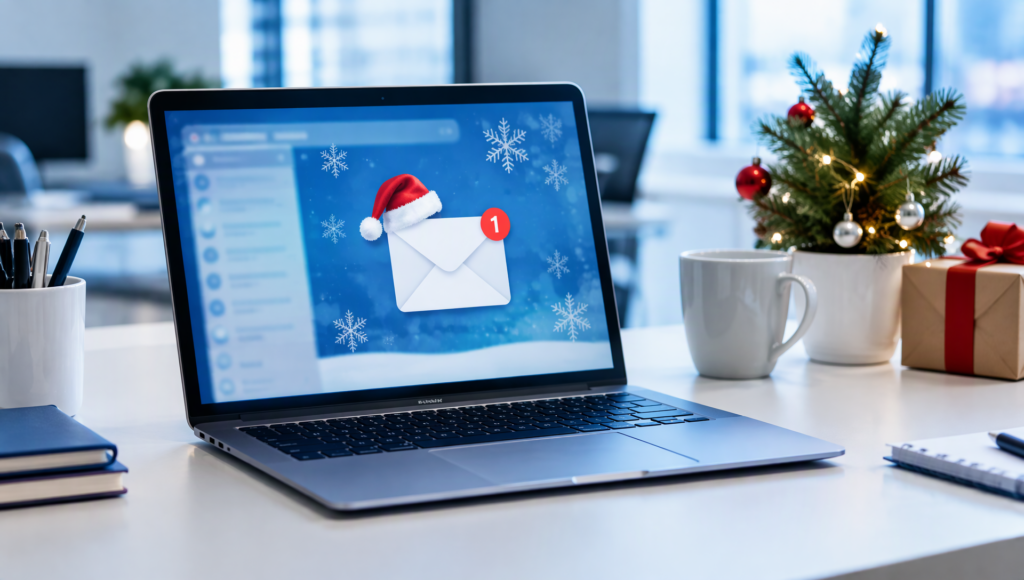
The decorations might not be up yet, but cybercriminals are already getting into the Christmas spirit, and not in a good way.
Every year, the run-up to Christmas brings a wave of holiday-themed scams. Hackers know that December is a busy, distracted time for businesses. People are rushing to close deals, attend events, and wind down for the year. That distraction makes them easier to fool.
This year, those attacks have started early. And they are more convincing than ever.
A Real Example: The Fake Christmas Dinner Invitation
In mid-November 2026, Microsoft’s security team identified a large-scale phishing campaign built around a simple but clever idea: a fake company Christmas dinner invitation.
The emails appeared to come from an organisation’s own HR department, inviting employees to a paid end-of-year appreciation dinner. The subject lines were friendly and familiar, things like “A Special Dinner to Say Thank You!” and even included the recipient’s company name to make them look genuinely internal.
The emails looked professional. They included the company’s own branding, appeared to come from a trusted sender (Adobe’s email domain was spoofed), and even showed a fake “safe sender” badge, as if a security system had already verified the message as legitimate. It had not. That badge was part of the scam.
When recipients clicked the “Review invite” or “RSVP now” links, they were taken on a journey through several redirects, including a recognisable Google link at the start, which added an air of legitimacy, before landing on a fake verification page. That page asked them to prove they were human by clicking a checkbox. Rather than a harmless security step, this was designed to harvest information and potentially steal login credentials.
In total, the campaign targeted more than 32,000 people across more than 1,600 organisations in a single nine-hour window. The most targeted sectors were retail, technology, and financial services.
Why Holiday-Themed Scams Work So Well
It is worth taking a moment to understand why this kind of attack is so effective, because it is not about bad spelling or obvious red flags.
Holiday-themed phishing works because it feels normal. At this time of year, your team genuinely does expect invitations, messages from HR, notifications about events, and end-of-year communications. An email about a Christmas dinner does not set off alarm bells in the same way a message about resetting your bank password might.
Attackers know this. They craft their campaigns to blend in with the seasonal noise, using real branding, personalised details, and time pressure (an RSVP deadline, for example) to push people into acting quickly without thinking carefully.
The result is a scam that looks, feels, and reads like the real thing. That is what makes it dangerous.
What to Watch Out For This Christmas
You do not need to become a cybersecurity expert to stay safe. You just need to know what to look for.
Unexpected invitations or notifications
If you receive an email about a company event, offer, or opportunity that you were not expecting, treat it with a healthy degree of scepticism, particularly if it asks you to click a link to confirm or find out more.
Urgency and deadlines
Scammers use urgency to bypass your better judgement. “RSVP by Friday — seats are limited” is designed to make you act before you think. Legitimate communications rarely demand an instant response.
Links that do not go where you expect
Before clicking any link, hover over it to see the actual web address. If it looks unusual, long, or directs you somewhere unexpected, do not click it. When in doubt, go directly to the relevant website by typing the address yourself.
Emails that look official but feel slightly off
Spoofed sender addresses are increasingly common. The name in the “From” field might say something familiar, but the actual email address behind it may tell a different story. A quick check can save a lot of trouble.
Requests to verify your identity
Legitimate services rarely ask you to verify that you are human via a random web page. If a link takes you somewhere asking you to complete a “security check” before showing you content, leave the page.
Simple Steps to Protect Your Business
- Brief your team. Let your staff know that holiday-themed phishing is active right now. A quick conversation or a brief note can make a real difference. People are much harder to fool when they know what to look for.
- Turn on multi-factor authentication (MFA). Even if someone’s login details are stolen, MFA means an attacker still cannot access the account without a second form of verification. If you have not already switched this on for all your business accounts, now is a good time.
- Verify unexpected communications through a different channel. If you receive an email about a company event or HR matter that surprises you, pick up the phone and check with the sender directly; do not reply to the email or click any links until you are sure it is genuine.
- Report anything suspicious. Encourage your team to report unusual emails rather than just deleting them. The sooner a threat is spotted, the faster it can be dealt with.
- Make sure your email security is up to date. Modern email security tools can detect and block many of these attacks before they reach your inbox. If you are not sure what protection you have in place, it is worth finding out.
A Busy Time of Year Is Exactly When Attackers Strike
Cybercriminals are strategic. They do not pick random moments to run their campaigns; they choose times when people are busy, distracted, and more likely to act without thinking. The Christmas period is one of the most targeted times of year for businesses, and the attacks are already underway.
The good news is that a little awareness goes a long way. Most phishing attacks succeed not because of sophisticated technology, but because people are caught off guard. By knowing what to look for and sharing that knowledge with your team, you can significantly reduce your risk.
If you would like help making sure your business is properly protected going into the new year, whether that is reviewing your email security, setting up MFA, or putting a staff awareness programme in place, we are happy to have a conversation.
Get in touch with the Blisstech team, and we will help you start the new year with your defences in good shape.