Global State of Ransomware Report 2020 • Blisstech Solutions

Datto have released their annual Global State of the Channel Ransomware Report for 2020. They have interviewed more than 1000 managed service providers (MSPs) around the world. The report gives details on the state of ransomware from the perspective of the professionals responsible for managing small and medium-sized business (SMB) IT systems.  Here are some of the key findings:

COVID-19 and remote working

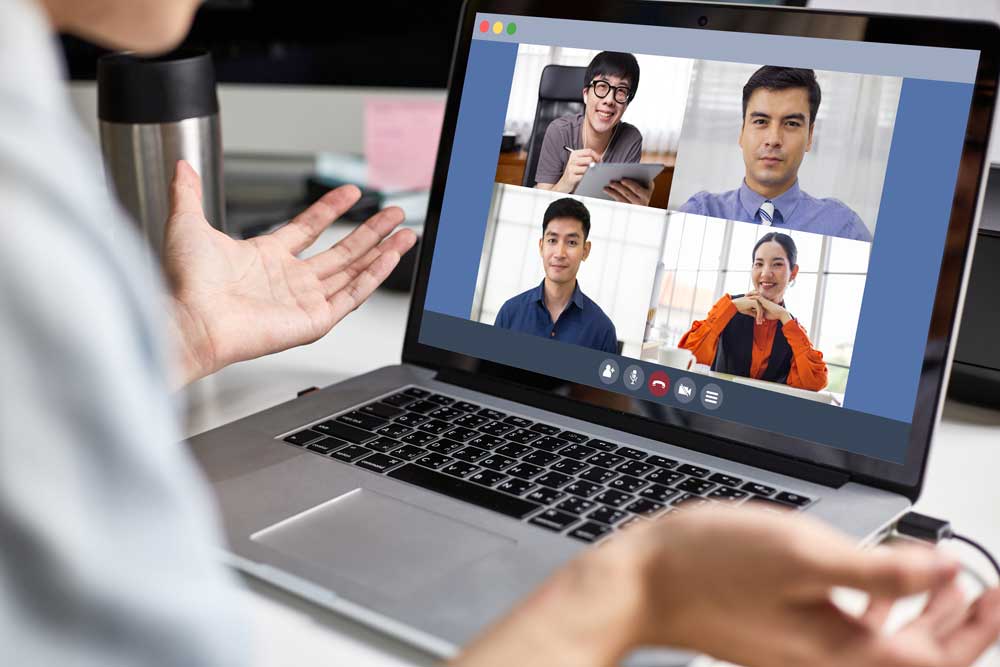
The number of ransomware attacks has increased during COVID-19, largely precipitated by people working from home, using personal computers that are not secure and are possibly being shared by an entire family who do not follow the best security practices.
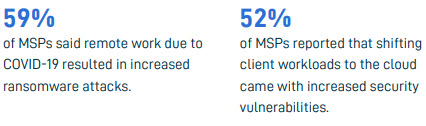
COVID-19 impact on ransomware according to MSPs

Business owners do not see the threats

An interesting statistic in the report is that, while 84% of MSPs believe that SMBs should be very concerned about ransomware, only 30% of SMBs are concerned. The SMB figure was even lower in Europe, at 19%. This indicates a problem regarding awareness within SMBs of the threats. That said, 50% of MSPs report that their clients’ security budget had increased in 2020, most likely because of the COVID-19 pandemic and the increase in home working.
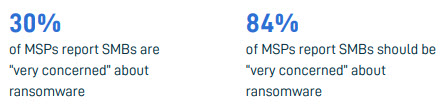
84% of MSPs vs 30% of SMBs said they were concerned about ransomware

Ransomware is becoming more evasive

MSPs report that ransomware is becoming better at evading detection, with 50% of MSPs stating that it got through all security defences. This is largely because cybercriminals use a slightly modified version of their ransomware for each attack so that it avoids detection. Using a multi-layered approach to cybersecurity is more likely to prevent an attack than just using a single solution.
SMBs must assume that it is a case of, not if, but when you will be attacked, and prepare for that eventuality.
Having a defensive in-depth approach, encompassing cybersecurity tools, business continuity and disaster recovery (BCDR) solutions, incident response planning and user awareness training, will give you the best chance of avoiding an attack, and recovering from an attack when it happens.
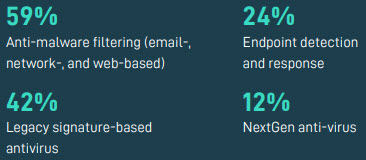
MSPs report that many of the security solutions used could be bypassed by ransomware

MSPs statistics on which cybersecurity solutions were bypassed by ransomware

Phishing is the number one cause of ransomware attacks

54% of MSPs reported that phishing emails were the leading cause of ransomware attacks amongst their clients. Using security solutions to detect and block phishing emails is important, but not as important as educating your users on how to recognise and report suspected phishing emails.
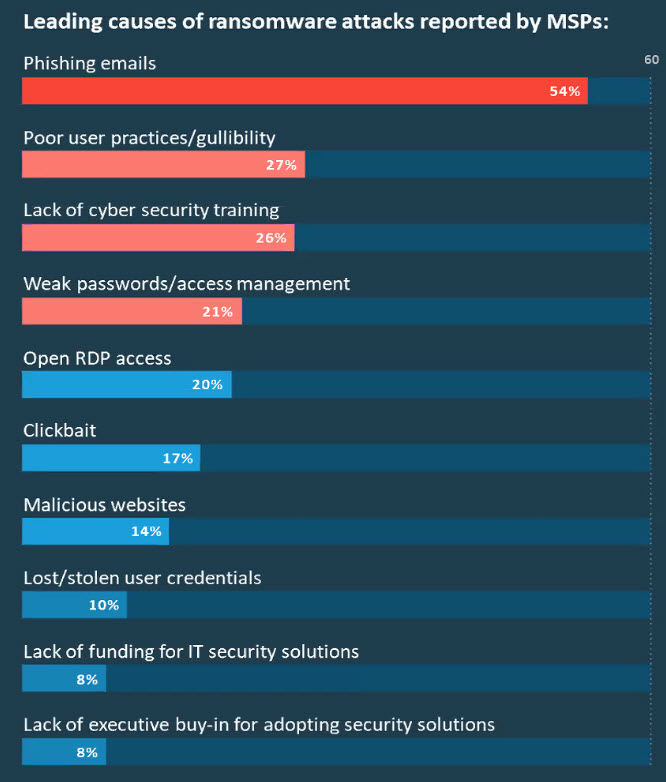
Top causes of ransomware

Quick recovery minimises impact

Ransomware attacks can have a massive impact on a business’ ability to operate. The biggest consequence of a ransomware attack is the loss of productivity caused by downtime. Having the ability to quickly recover from an attack is key to minimising the impact.  Clients with BCDR solutions and plans are far less likely to experience significant downtime. 91% of MSPs said clients with BCDR were able to recover from a ransomware attack very quickly.
The reputational damage caused by an attack cannot be understated. If your customers think you are not taking care of their data, are they likely to go elsewhere?
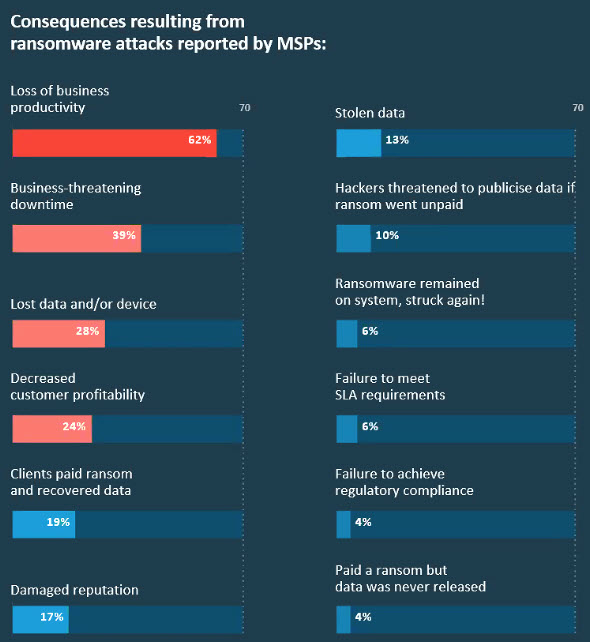
Top consequences of ransomware


Conclusion

Ransomware is not going away. In fact, each year the numbers increase. This is because it is very profitable for cybercriminals. While they are able to extort money from their victims, they have a business model that is profitable, and they will continue.
While paying the ransom should never be completely discounted in your incident response plan, it is a risky approach as there is no guarantee that the cybercriminals can be trusted to complete their side of the bargain.  Plus, paying cybercriminals only perpetuates the problem.
The best way to protect your business from ransomware is to have a layered approach which comprises cybersecurity awareness training, incident response, cybersecurity tools, and a BCDR solution.
If you are interested in understanding how we can help you to protect your business from ransomware please click this link to arrange a call. We’d be delighted to discuss this with you.


More Content

A handshake reaching out of a laptop screen

What is a managed service?

If computers are an essential part of your business you will probably have someone looking after them for you, but what type of service are you getting from them?  Have you heard the expression "Managed Service" or "Break/Fix"? You may have heard these expressions and...
artificial intelligence thumbnail

Let’s start talking about Artificial Intelligence (AI)

From Alexa to Siri, AI is already all around us, but names like ChatGPT, Dall-E and Jasper have blown up the internet. Let’s decode some of the language

New! A better way to find Chrome extensions

New! A better way to find Chrome extensions

The Chrome Web Store’s been given a massive makeover, and it’s all about making your team’s life easier. We have all the details.

When can you finally forget your password?

Passkeys are set to take over from traditional passwords to give us a safer, more secure way of logging into our online accounts.

Why now is a great time to start your own business

"I can accept failure, but I can't accept not trying." - Michael Jordan We are living in unprecedented times.  People are being prevented from leaving their homes and the average worker has been sent to work from home, put on reduced hours, or worse.  It is...
How to create secure passwords

How to create secure passwords

Weak passwords are one of the biggest security risks to your business.
Why?
Because cyber criminals are getting smarter than ever before. If they manage to crack just one password, they could gain access to your sensitive business data, financial information, or even gain control of your entire system.
Cyber criminals use automated tools to guess passwords, allowing them to try out millions of combinations in seconds. So, if you’re using something like “Password123” or “CompanyName2025”, you’re practically handing them the keys to your business.
A compromised password can lead to big issues, such as:
• Data breaches
• Financial losses
• Identity theft
• Reputation damage
But how do you create strong passwords without driving yourself (and your team) mad?
Think of your password like a secret recipe, where only you should know the ingredients. It should:
• Be at least 14 characters long (the longer, the better)
• Include a mix of uppercase and lowercase letters
• Contain a few numbers and symbols (like @, $, %, or &)
• Not contain any common words or easily guessable information (like birthdays, names, or the word “password”)
Instead of using a single word, you could try a passphrase – a short, random sentence that only you would understand. For example, instead of “Sailing2025”, try something like “Coffee&CloudsAreGreat9!”. This is much harder to crack, yet still easy to remember.
You should also steer clear of these common mistakes:
• Using personal info (your name, birthday, business name, etc.)
• Reusing the same passwords across multiple accounts
• Using simple sequences (“123456” or “abcdef”)
• Storing passwords in an easily accessible place (like a sticky note on your desk)
If remembering unique passwords for every account sounds impossible, there is another option: Password managers. These generate strong passwords, store them securely and autofill them for you.
With a password manager, you only need to remember one strong master password for the manager app itself. The rest are encrypted and stored safely, reducing the risk of data breaches.
Even the strongest password isn’t foolproof, which is why multi-factor authentication (MFA) is also important. MFA requires a second form of verification, like a one-time code sent to your phone or generated from an authentication app.
If you have employees accessing your business systems, it’s a good idea to have a password policy in place to explain your rules and why they’re important. This should include:
• Unique passwords for each system and account
• Regular security training on password best practices
• Business-wide use of MFA for critical systems
• Scanning for compromised passwords regularly
By making password security a priority, you can reduce the chances of a cyber attack creating a nightmare for your business.
And if you need help making your business more secure, get in touch.

Why you will not be fine on this Cloud9

Fake Flash messages are being used as a cover for a new ‘botnet’ campaign. If you use Google Chrome or Microsoft Edge you could be a target.

It’s time to say goodbye to traditional passwords

Say goodbye to traditional passwords, say hello to Passkeys

Passwords could soon be a thing of the past, thanks to Passkeys. If you hate passwords, our latest tech update will make your day…

Can’t find what you need in Teams? This makeover will increase your business’s productivity

The Teams Fall 2024 update will increase your business’s productivity

The latest feature update in Teams is bringing a central notifications hub to keep things more organised. And a whole host of other useful features. We’ll tell you all about it here.

Are you ready for next-gen email security? (YES!)

Are you ready for next-gen email security? (YES!)

Sick of spam emails? We have details of a cool new tool to help keep us better protected.

Share This
Contact
Love Lane
Cleobury Mortimer
Shropshire DY14 8PE

01299 382 321
[email protected]
Copyright © Blisstech Solution Ltd
Registered No: 08125391 VAT No : 307 5490 05